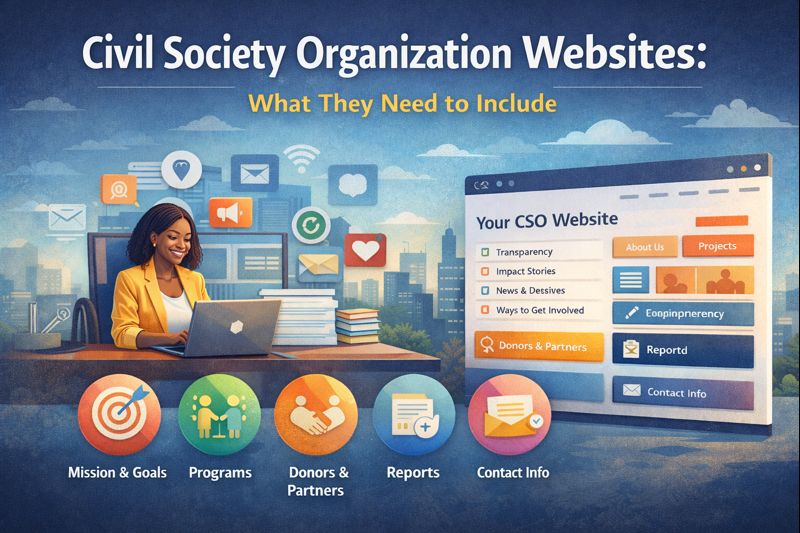
Civil Society Organizations (CSOs) play a critical role in social development, advocacy, governance, humanitarian response, and community empowerment. Whether working at grassroots, national, or international level, CSOs rely heavily on credibility, transparency, communication, and visibility.
In today’s digital world, a professional website is no longer optional for civil society organizations—it is essential.
This article explores:
- Why CSO websites matter
- What a strong civil society website should include
- Common mistakes to avoid
- How a well-built website supports funding, partnerships, and impact
- Why Impress Media is the right partner to build civil society websites
Understanding Civil Society Websites
A civil society website is more than an online presence. It is a strategic platform that serves multiple audiences, including:
- Donors and funding partners
- Government and regulatory bodies
- Beneficiaries and communities
- Volunteers and staff
- Media and researchers
- The general public
Unlike commercial websites, CSO websites must balance professionalism, accountability, storytelling, and impact communication.
Why Civil Society Organizations Need a Professional Website
1. Credibility and Trust
Donors, partners, and stakeholders often assess credibility through a website. A professional website communicates:
- Legitimacy
- Transparency
- Organizational maturity
- Accountability
A poorly designed or outdated website can raise doubts—even if the organization is doing excellent work on the ground.
2. Transparency and Accountability
Most civil society organizations are required to demonstrate:
- Clear governance structures
- Financial accountability
- Program impact
- Compliance with laws and regulations
A website allows CSOs to publish:
- Annual reports
- Financial summaries
- Strategic plans
- Governance information
- Policies and compliance documents
This builds confidence among donors and regulators.
3. Visibility and Advocacy
CSOs rely heavily on awareness and advocacy. A website helps:
- Share campaigns and initiatives
- Publish research and policy briefs
- Amplify voices from communities
- Influence public opinion and decision-making
With proper SEO, a civil society website ensures that important issues are discoverable on Google, not hidden.
4. Fundraising and Resource Mobilization
Modern donors expect:
- Easy access to information
- Clear articulation of impact
- Digital donation options
A well-structured website can support:
- Online donations
- Grant applications
- Partner onboarding
- Proposal credibility
5. Communication Hub
A CSO website acts as a central communication point for:
- News and updates
- Press releases
- Events and trainings
- Volunteer engagement
- Stakeholder announcements
Core Elements Every Civil Society Website Should Include
1. Clear Organizational Identity
A strong CSO website must clearly answer:
- Who are we?
- What do we do?
- Why do we exist?
- Who do we serve?
This includes:
- Mission and vision statements
- Core values
- Organizational history
- Geographic focus
Clarity builds trust.
2. Governance and Leadership Information
Transparency is critical for civil society organizations.
Recommended sections include:
- Board of directors
- Management team
- Advisory committees
- Governance structure
This reassures donors and partners that the organization is well governed.
3. Programs and Projects Section
This is one of the most important parts of a CSO website.
Each program should clearly outline:
- Objectives
- Target beneficiaries
- Geographic coverage
- Activities
- Outcomes and impact
Visuals such as photos, infographics, and reports strengthen storytelling.
4. Impact and Results
Civil society organizations must show results, not just intentions.
An effective website includes:
- Impact stories
- Case studies
- Statistics and indicators
- Testimonials from beneficiaries
- Monitoring and evaluation highlights
This helps donors and partners see real-world outcomes.
5. Reports and Publications
A professional CSO website should have a dedicated section for:
- Annual reports
- Financial reports
- Strategic plans
- Policy briefs
- Research publications
These documents enhance transparency and institutional credibility.
6. Donor and Partner Information
Showcasing partnerships is essential.
This may include:
- Logos of donors and partners
- Project collaborations
- Funding acknowledgments
- Strategic alliances
It demonstrates legitimacy and strengthens confidence among new partners.
7. News, Updates, and Media
A regularly updated news section shows that the organization is active and relevant.
This section can include:
- News articles
- Press releases
- Event updates
- Statements and announcements
It also supports SEO and public engagement.
8. Calls to Action
Civil society websites must guide visitors toward action, such as:
- Donate
- Volunteer
- Partner with us
- Attend events
- Subscribe to newsletters
Clear calls to action turn visitors into supporters.
9. Contact and Accessibility Information
Every CSO website must include:
- Physical address
- Email contacts
- Phone numbers
- Social media links
- Contact forms
Accessibility and openness matter deeply in civil society work.
10. Thematic Areas: Defining the Focus of a Civil Society Organization
Thematic Areas are the core focus areas that define what a civil society organization does. They help stakeholders quickly understand where the organization works, what issues it addresses, and how its work is structured.
For donors, partners, and policymakers, Thematic Areas are often the first thing they look for.
A well-designed civil society website must clearly present its thematic areas in a structured and accessible way.
Why Thematic Areas Matter on a CSO Website
Clearly defined thematic areas:
- Communicate organizational focus and expertise
- Help donors align funding priorities
- Improve clarity for partners and collaborators
- Strengthen advocacy positioning
- Improve website navigation and user experience
- Support proposal development and reporting
Without thematic areas, a CSO website can feel unclear, scattered, or unfocused.
Common Thematic Areas for Civil Society Organizations
While thematic areas vary by organization, common examples include:
- Governance & Democracy
- Human Rights & Social Justice
- Gender Equality & Women Empowerment
- Youth Development
- Health & Public Wellbeing
- Education & Skills Development
- Climate Change & Environmental Protection
- Peacebuilding & Conflict Resolution
- Economic Empowerment & Livelihoods
- Disability Inclusion
- Child Protection
- Civic Engagement & Accountability
Each thematic area should clearly reflect the organization’s mission and mandate.
How Thematic Areas Should Be Presented on a Website
A professional civil society website should:
- Display thematic areas as a dedicated main menu item
- Use icons or visuals for easy recognition
- Link each thematic area to detailed sub-pages
- Keep language clear, non-technical, and impact-focused
What Each Thematic Area Page Should Include
For maximum clarity and credibility, each thematic area page should outline:
- Overview of the thematic area
- Why the issue matters
- Target groups and communities
- Key programs and projects
- Geographic focus
- Outcomes and impact
- Related publications or reports
- Relevant partners and donors
- Calls to action (donate, partner, learn more)
This structure helps both technical and non-technical audiences understand the organization’s work.
Thematic Areas and Storytelling
Strong CSO websites use thematic areas as storytelling tools by:
- Highlighting success stories under each theme
- Sharing real-life beneficiary experiences
- Linking advocacy messages to field work
- Showing measurable change within each area
This approach humanizes the organization’s impact.
SEO Benefits of Thematic Areas
Well-structured thematic pages:
- Improve search engine visibility
- Rank for issue-specific keywords
- Attract donors and researchers searching by topic
- Strengthen overall website authority
Each thematic area becomes a searchable digital asset.
Design and Technical Requirements for CSO Website
Mobile Responsiveness
Many stakeholders access websites using mobile phones, especially in Africa. A CSO website must:
- Adapt to all screen sizes
- Load quickly on mobile networks
- Be easy to navigate
User-Friendly Navigation
Information should be easy to find. Poor navigation frustrates users and damages credibility.
Security and Data Protection
CSO websites often collect sensitive data. Security features should include:
- SSL certificates
- Secure contact forms
- Data protection compliance
- Regular updates and backups
Search Engine Optimization (SEO)
A CSO website should be optimized to:
- Rank on Google
- Be discoverable by donors and researchers
- Increase visibility of advocacy content
SEO is essential for long-term reach.
Content Management System (CMS)
Organizations should be able to:
- Update content easily
- Upload reports
- Publish news
- Manage pages internally
A user-friendly CMS empowers internal teams.
Common Mistakes Civil Society Websites Should Avoid
- Outdated content
- Poor mobile performance
- Missing reports or governance information
- Overly complex language
- No clear calls to action
- Weak storytelling
- Lack of maintenance
These issues reduce credibility and effectiveness.
How a Strong Website Supports Funding and Partnerships
Donors and partners often review an organization’s website before:
- Funding decisions
- Due diligence
- Partnerships
- Invitations to collaborate
A strong website:
- Strengthens proposals
- Supports grant applications
- Enhances institutional image
- Positions the organization as professional and reliable
Why Impress Media Is the Right Partner for Civil Society Websites
At Impress Media, we understand the unique needs of civil society organizations.
We don’t just build websites—we build impact-driven digital platforms.
Our approach includes:
- Deep understanding of CSO goals and audiences
- Transparent and inclusive design
- SEO and visibility optimization
- Secure and scalable platforms
- Storytelling that reflects real impact
- Ongoing support and digital growth strategies
Beyond websites, we also offer:
- Digital marketing and visibility strategies
- Branding and creative services
- Graphics, illustrations, and voice overs
- Integrated digital communication solutions
We work closely with organizations to ensure their website truly reflects their mission, values, and impact.
Final Thoughts: A Website Is a Strategic Asset for Civil Society
For civil society organizations, a website is not just a digital presence—it is a tool for trust, advocacy, funding, and impact.
A well-designed website:
- Builds credibility
- Enhances transparency
- Amplifies voices
- Attracts partners and donors
- Supports long-term sustainability
If your organization is committed to making a difference, your digital presence should reflect that commitment.
Ready to Build a Powerful Civil Society Website?
If your organization is planning to build or upgrade its website, Impress Media is ready to partner with you.
Contact us today and let’s build a civil society website that communicates impact, builds trust, and supports your mission.